Blog
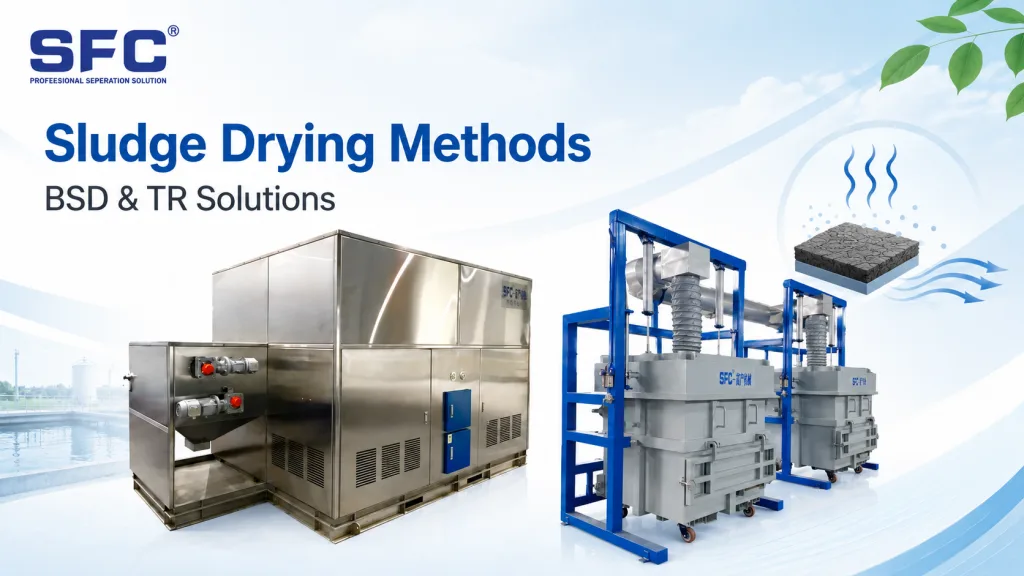
Sludge Drying Methods: How to Reduce Sludge Volume Efficiently
Sludge drying is used after dewatering to further reduce sludge moisture, volume, transportation pressure, and disposal cost. This article explains common sludge drying methods, including thermal drying, solar drying, low-temperature belt drying, and reciprocating circulation drying, and introduces how SFC sludge drying solutions support municipal and industrial wastewater treatment projects.
How Sludge Drying Systems Help Reduce Disposal Costs in Wastewater Treatment
Sludge drying systems help reduce disposal costs by lowering the moisture content, weight, and volume of dewatered sludge. For municipal and industrial wastewater treatment plants, drying can improve storage, transportation, final disposal, and resource recovery options. SFC provides sludge drying solutions that can be integrated with dewatering and deep dewatering
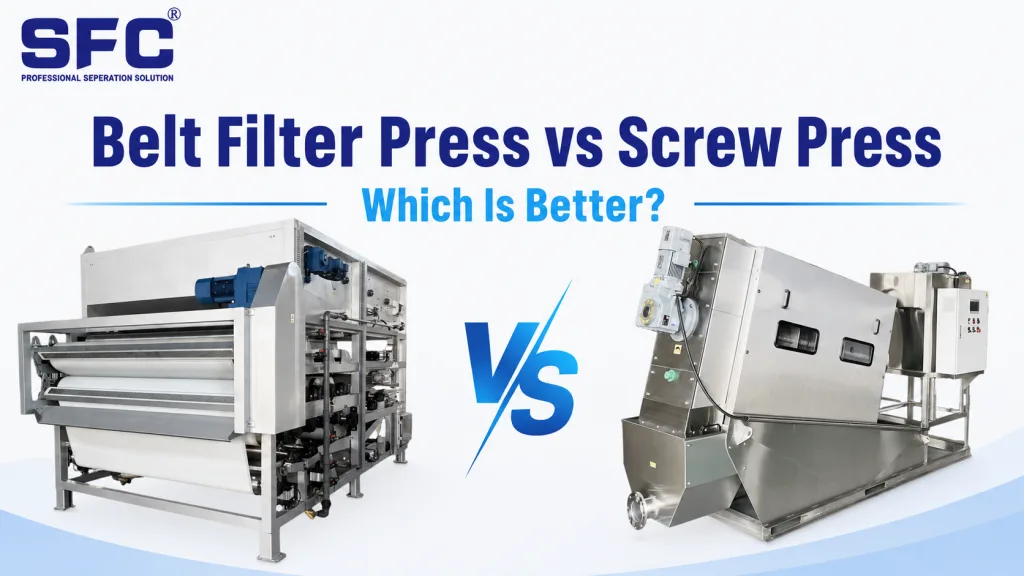
Belt Filter Press vs Screw Press: Which Sludge Dewatering Machine Is Better?
Belt filter press and screw press machines are both common sludge dewatering solutions, but they are suitable for different project conditions. Belt filter presses are often used for larger capacity and continuous operation, while screw presses are preferred for compact layout, low energy consumption, and simpler maintenance. This article compares
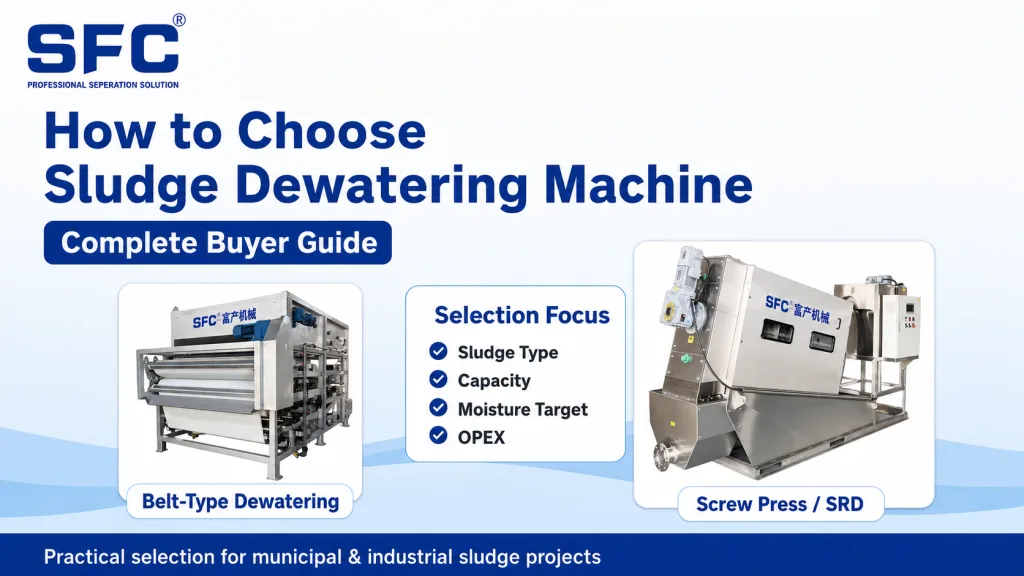
How to Choose a Sludge Dewatering Machine: Complete Buyer Guide
Choosing the right sludge dewatering machine depends on sludge type, treatment capacity, target cake moisture, operating cost, site layout, and final disposal requirements. This buyer guide explains how to compare screw press, SRD wear-free screw press, belt sludge dewatering machine, rotary drum dewatering equipment, and deep dewatering systems for municipal
Why Sludge Thickening Is Important Before Dewatering and Drying
Sludge thickening is an important pretreatment step before sludge dewatering, deep dewatering, or drying. By increasing solids concentration and reducing sludge volume, an effective thickening system can help improve downstream equipment performance, reduce operating load, and support more efficient sludge management in municipal and industrial wastewater treatment projects.
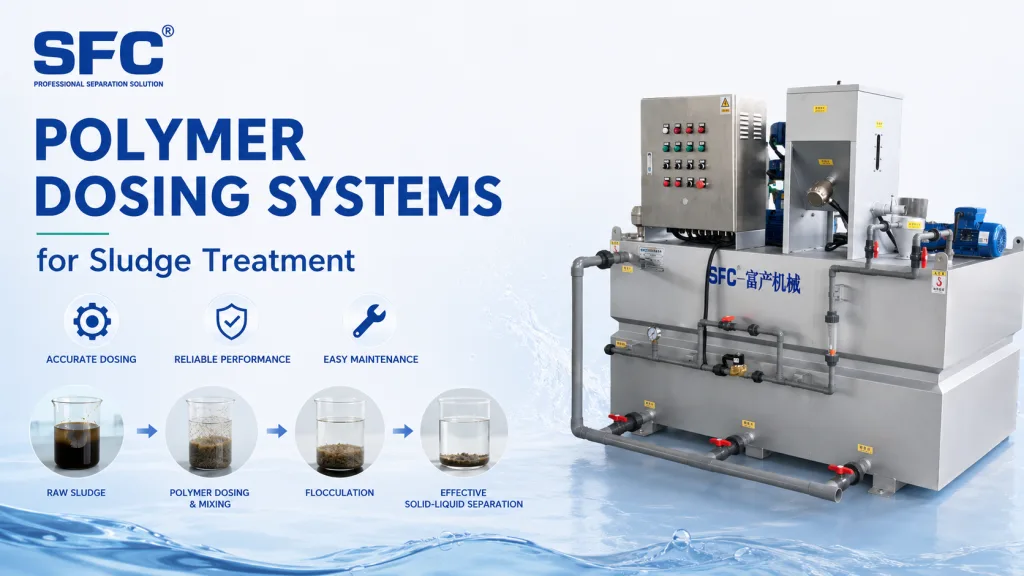
Why Polymer Dosing Systems Are Important in Sludge Dewatering
Polymer dosing systems are essential for sludge conditioning, flocculation, and stable dewatering performance. By preparing and dosing polymer solution accurately, they help improve solid-liquid separation, support sludge thickening and dewatering equipment, control chemical consumption, and improve the reliability of municipal and industrial sludge treatment systems.
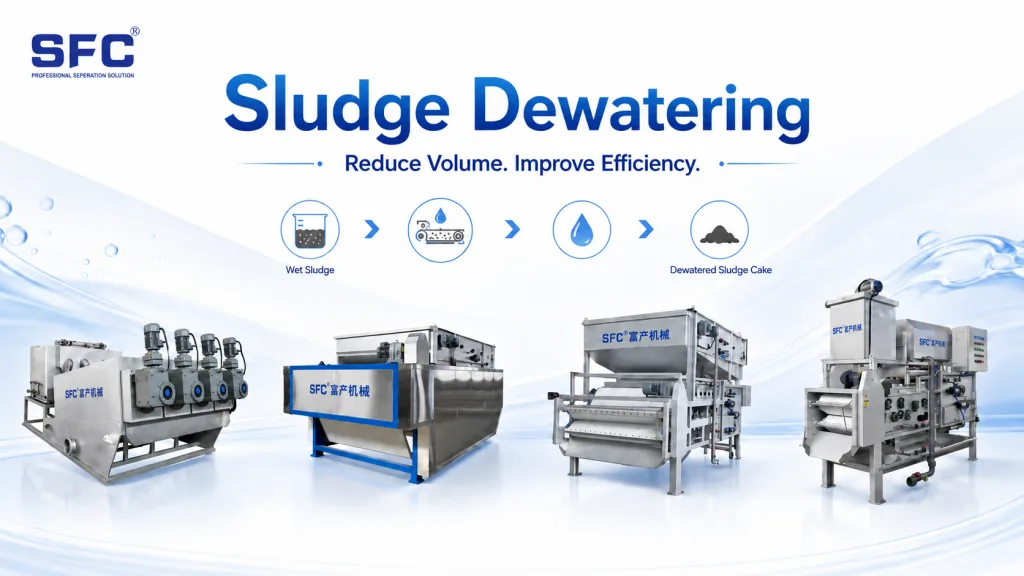
Why Sludge Dewatering Matters for Modern Wastewater Treatment Plants
Sludge dewatering is a key process in modern wastewater treatment plants. By reducing water content, sludge volume, and handling difficulty, an efficient dewatering system can help lower transportation and disposal pressure, improve sludge cake handling, and support downstream drying, deep dewatering, or resource recovery. SFC provides sludge dewatering solutions for
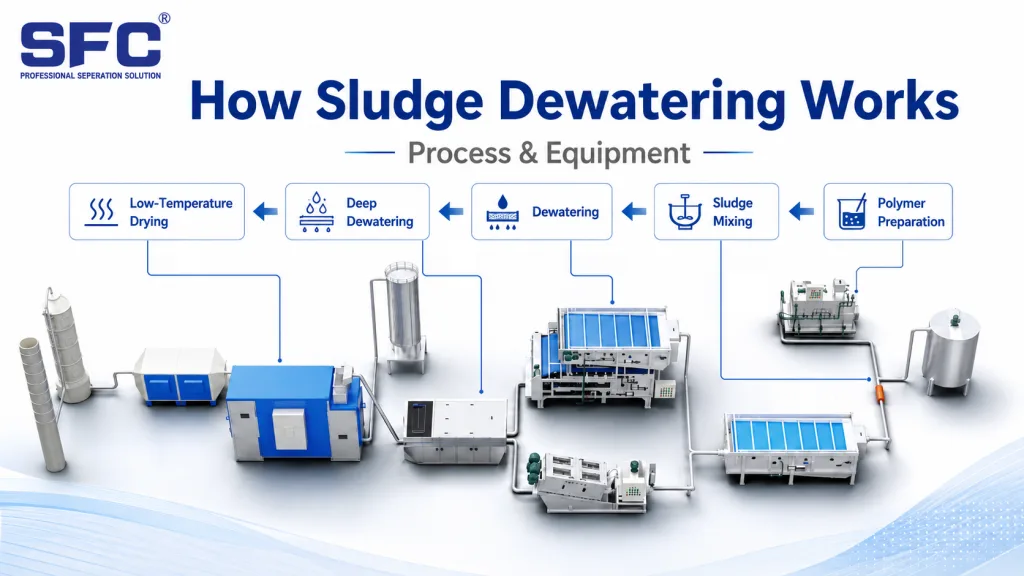
How Sludge Dewatering Works: Process and Equipment Explained
Sludge dewatering works through polymer dosing, flocculation, gravity drainage, mechanical pressing, and sludge cake discharge. This article explains how the process works and compares common equipment options, including screw press dewatering machines, SRD wear-free screw presses, belt sludge dewatering machines, rotary drum systems, and high-pressure deep dewatering systems for municipal
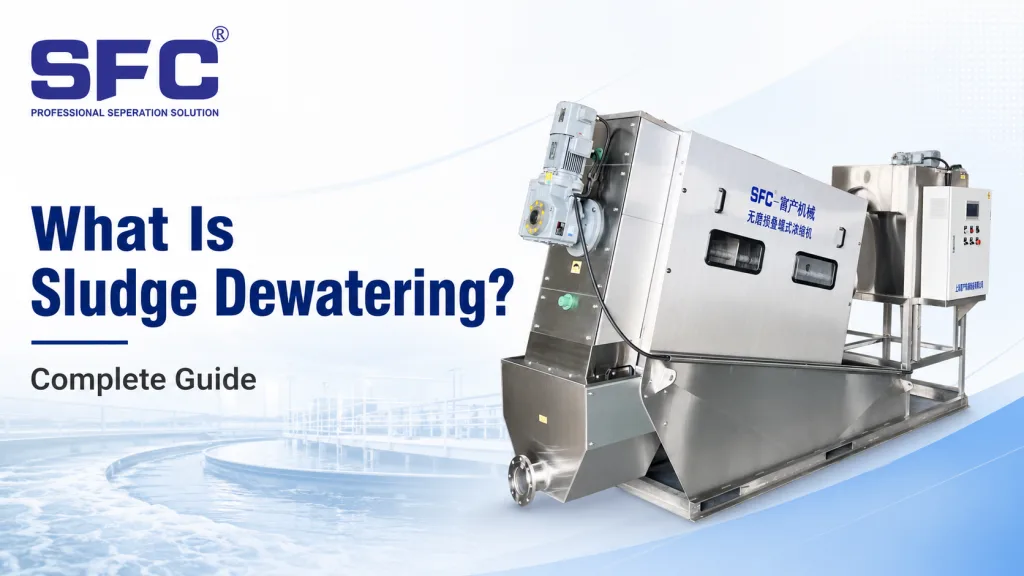
What Is Sludge Dewatering? A Complete Guide for Wastewater Treatment
Sludge dewatering is the process of removing water from sludge to reduce its volume, weight, and disposal pressure. This guide explains why sludge dewatering is important, how the process works, common dewatering equipment such as screw press, belt press, rotary drum systems, and how to choose a suitable solution for